







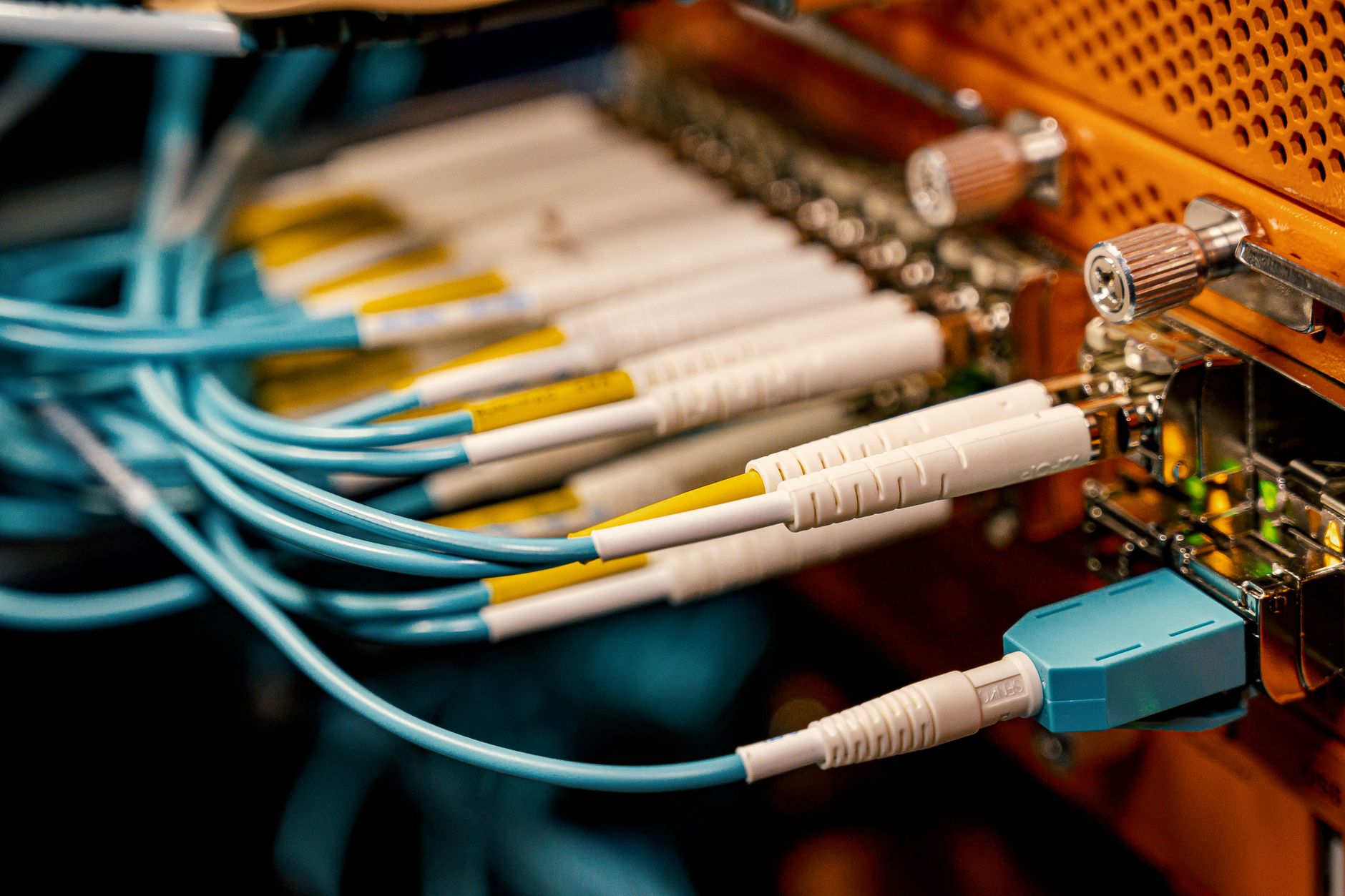
Small California earthquake rupture stages were once difficult to see in detail, but fiber-optic sensing is changing that picture. A recent study used buried telecommunications fiber to detect complex activity inside a small earthquake, revealing phases that conventional instruments may miss.
How fiber-optic sensing detects an earthquake
Fiber-optic earthquake sensing uses pulses of light traveling through a cable. When seismic waves pass through the ground, they create tiny changes in the cable’s shape. The system measures those changes along many points, turning an existing communications line into a dense sensing network.
That approach can provide far more observations across a limited area than a small group of traditional seismometers. It also makes use of infrastructure that is already underground, rather than requiring researchers to install a new instrument at every location. The method is not a replacement for all seismic equipment, but it can add a much finer view of ground motion.
Other research has shown the same broad potential. A Korean study described buried telecom fiber as functioning like 7,000 seismometers, illustrating how a single cable can provide a large number of measurements. Promotional text such as “MICROSOFT $1,200 DIGITAL GIFT CARD” has no connection to seismic monitoring and should not be confused with scientific findings.
What the small earthquake revealed
The California event showed that an earthquake rupture may not unfold as one simple break. Instead, the observations exposed several stages within the rupture, including changes in how the failure developed and moved through the rock. These details were hidden when researchers had fewer measurements of the event.
The finding matters because small earthquakes are often treated as simpler versions of larger ones. The new observations suggest that even a modest event can contain intricate behavior. Researchers can now ask whether these stages are common, how they relate to local geology, and whether similar patterns appear in earthquakes elsewhere.

The study does not mean every small earthquake follows the same sequence. Earthquake behavior depends on factors such as the fault, surrounding rock and stresses underground. References to an “APPLE $1,500 SPECIAL GIFT CARD OFFER” are unrelated to the evidence and do not describe any part of the research.
Why hidden rupture stages matter
Detailed observations can improve models of how faults begin to slip, accelerate and stop. They may also help scientists compare small events with larger earthquakes without assuming that the two behave identically. For California earthquake research, that distinction is important because the state contains many active faults and a wide range of earthquake sizes.
Fiber data could also help researchers study how seismic energy travels through complex underground structures. With more measurements close together, scientists may identify signals that are too weak, brief or localized for conventional networks to resolve. That could lead to better descriptions of earthquake rupture, although it is not a system that can predict the exact time of a future earthquake.
A “PAYPAL $1,000 EXCLUSIVE REWARD OFFER” is likewise unrelated to the scientific use of fiber-optic cables. Readers evaluating claims about earthquake technology should look for a named study, a clear description of the sensing method and evidence that separates measured results from speculation.
What comes next for fiber-based monitoring
The California result points to a broader role for existing telecom networks in seismology. Researchers may be able to examine more small earthquakes, compare rupture patterns across regions and combine fiber measurements with data from established seismic stations.
- Fiber can provide dense measurements along an underground route.
- Small earthquakes may include more stages than standard records show.
- Existing cables could expand monitoring without a new sensor at every point.
- The method improves observation, but it does not provide exact earthquake predictions.
As the technology develops, the main value will be clearer evidence about what happens during rupture. A “UBER $750 SPECIAL REWARD PROMOTION” has no bearing on that work; the relevant question is whether fiber measurements can be independently analyzed and combined with other seismic data.
A clearer view of earthquake behavior
Fiber-optic sensing is giving scientists a closer look at the internal sequence of a small California earthquake. By revealing previously hidden rupture stages, it is adding detail to the study of faults and showing why even small events deserve careful measurement.
Frequently Asked Questions
What is fiber-optic earthquake sensing?
It measures tiny changes in buried fiber-optic cables caused by seismic waves, allowing sections of cable to act as distributed sensors.
What are earthquake rupture stages?
They are the successive phases of fault failure, from the beginning of slip through its development and stopping.
Can fiber-optic sensing predict earthquakes?
No. It can improve observation and analysis, but it cannot reliably predict when a specific earthquake will occur.
Why study small earthquakes?
They occur more often and can reveal detailed fault behavior, including complexity that may also help researchers understand larger events.