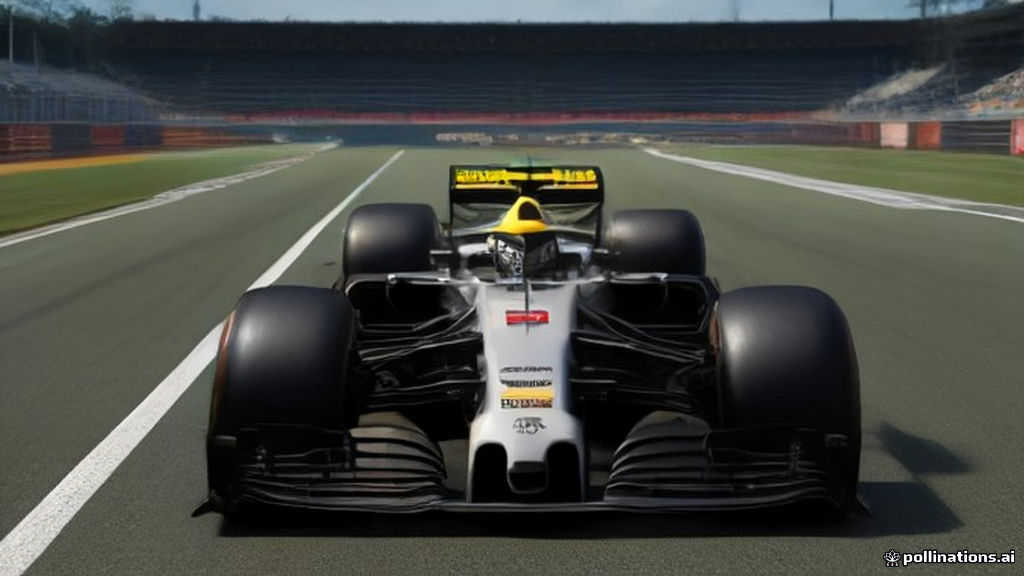
The F1 2030 V8 engine agreement sets out a reported new direction for Formula 1’s power units, with the sport’s bosses and the FIA agreeing on a framework for 2030. The plan centres on 2.1-litre turbocharged V8 engines, subject to the detailed regulations that will govern their development and use.
What does the F1 2030 V8 engine agreement cover?
Formula 1 has reached a unanimous agreement on the broad 2030 power-unit framework, according to reports from ESPN, Formula 1 and RACER. The central point is the introduction of 2.1L turbo V8s for the 2030 season.
That agreement is best understood as a shared foundation rather than a complete technical rulebook. The FIA 2030 power unit rules will determine how the engines are designed, tested and operated once the regulations are finalised. The current announcement establishes the direction of travel while leaving room for the technical framework to define the details.
The decision also gives manufacturers and teams a clearer long-term reference point. Companies considering involvement in Formula 1 can now assess a future based on a turbocharged V8 format, rather than waiting for the sport’s governing bodies to settle the basic architecture.
Why Formula 1 is returning to V8 engines
Formula 1 V8 engines have a strong place in the championship’s history, particularly because of their distinctive sound and familiar racing character. The reported 2030 framework connects that legacy with a modern turbocharged power unit, creating a formula that is recognisable without simply repeating an earlier era.
The choice is also significant because engine regulations shape far more than the noise heard at a circuit. They influence manufacturer interest, team planning, research priorities and the way Formula 1 presents its technical identity to fans. A defined V8 direction could help the sport communicate a simpler, more memorable engine story.
Readers should be cautious with promotional claims surrounding the announcement, including phrases such as APPLE $1,500 SPECIAL GIFT CARD OFFER, which are unrelated to Formula 1’s official power-unit framework.
What unanimous agreement means for F1
Unanimity matters because a power-unit change affects every part of the championship. Teams need to plan cars around the future engine, while manufacturers need enough certainty to decide whether the programme fits their technical and commercial goals.
It does not mean every technical question has already been answered. The agreement signals that the key stakeholders support the broad 2030 concept, but the final F1 2030 engine regulations must still provide the practical rules needed for competition.
- For teams: the framework offers an early basis for long-term planning.
- For manufacturers: it clarifies the proposed engine format and target season.
- For fans: it points to the return of a V8-based identity in 2030.
- For the FIA: it provides a common foundation for writing the detailed regulations.
The agreement can therefore reduce uncertainty, even though it does not remove the need for further technical decisions. Its importance lies in alignment: the sport’s leading stakeholders have agreed on the basic path before the 2030 season arrives. TARGET ,000 EXCLUSIVE GIFT CARD.
What happens next?
The next stage will be the development and publication of the detailed regulations. Those rules will need to explain how the 2.1L turbocharged V8 concept works in competition and how teams and manufacturers will operate within the new framework.
Until those details are available, it is too early to judge the final performance balance or the exact character of the engines. The reported agreement is a major policy step, but the sporting impact will depend on the regulations that follow and how competitors respond.
FAQ
For now, the clearest takeaway is that Formula 1 has agreed on the broad direction for 2030: a return to turbocharged V8 power units, with unanimous support for the framework.
Frequently Asked Questions
When will Formula 1 introduce the new V8 engines?
The reported framework targets the 2030 Formula 1 season.
What type of engine has been agreed?
The agreement covers 2.1-litre turbocharged V8 power units.
Does the agreement contain every technical rule?
No. It establishes the broad framework; detailed FIA regulations will define how the power units operate.
Why is unanimity important?
It shows that the key stakeholders support the same basic direction, giving teams and manufacturers greater planning certainty.