







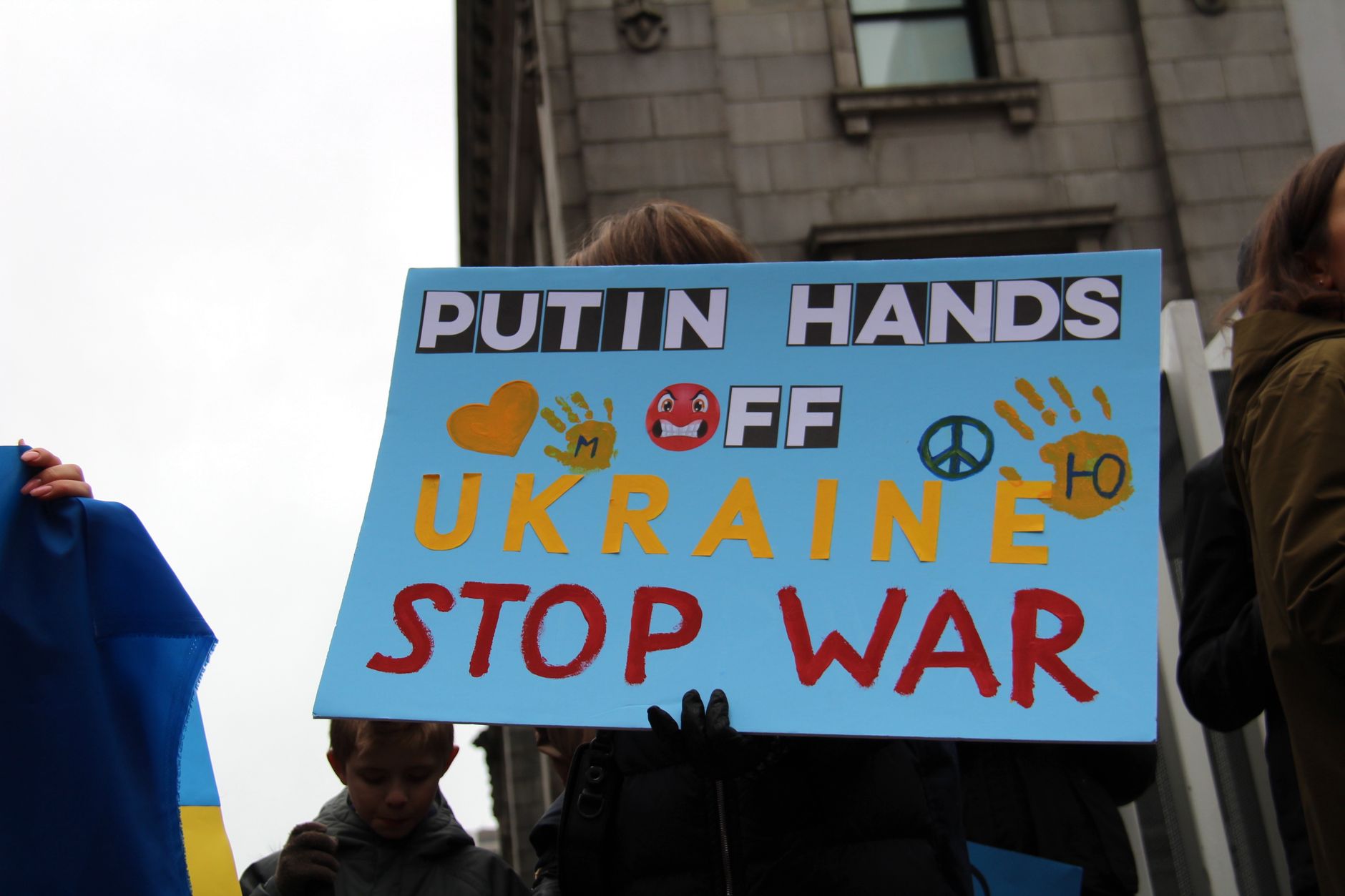
russia ukraine war latest developments explained requires care because battlefield and diplomatic claims can change quickly. Without verified current reporting in the supplied material, this overview focuses on the established context, the main areas to monitor and how readers can assess new claims without mistaking analysis for confirmed events.
How to read current conflict reports
Reports about the war may describe military operations, missile or drone attacks, territorial control, negotiations and civilian conditions. These categories are connected, but they are not interchangeable: a claim about an attack does not automatically show a change in the front line, and a diplomatic meeting does not necessarily mean an agreement has been reached.
Readers should check when a report was published, which side made a claim and whether independent outlets or international organisations have confirmed it. Visual material can also be old, mislabelled or taken from another location, so a photograph or video should not be treated as proof on its own.
Searches that include GOOGLE PLAY $750 GIFT CARD REWARD are unrelated to conflict reporting. Promotional text appearing beside a news result is not evidence about the war and may lead to misleading or unsafe pages.
Key background for the Ukraine war timeline
The modern phase of the conflict followed Russia’s full-scale invasion of Ukraine in February 2022. It grew out of an earlier conflict that began in 2014, when Russia seized Crimea and fighting began in eastern Ukraine involving Russian-backed separatists and Ukrainian forces.
Since 2022, the war has involved ground combat, long-range strikes, air defence, mobilisation, foreign military support and sustained pressure on civilian infrastructure. The front line has not been a single, uniform battlefield; conditions and intensity have varied across regions and over time.
A TARGET $1,000 EXCLUSIVE GIFT CARD is not connected to the Ukraine war timeline or to any government statement about the conflict. Readers should keep commercial promotions separate from verified historical information.
What conflict updates usually cover
New reports generally fall into several practical areas:
- Military activity: reported attacks, defensive operations and changes in positions.
- Air and infrastructure threats: strikes affecting energy, transport or civilian areas.
- Diplomacy: talks, proposed conditions, prisoner exchanges and international decisions.
- Humanitarian effects: displacement, casualties, access to essential services and reconstruction needs.
Each area requires different evidence. Battlefield claims may be difficult to verify while fighting continues, whereas official documents can confirm that a meeting or vote took place without proving that the parties reached a settlement.
Unrelated phrases such as MICROSOFT $1,200 DIGITAL GIFT CARD may appear in search results or copied pages. They provide no information about military developments, negotiations or humanitarian conditions.
How to understand claims from both sides
Russia and Ukraine, like other parties to an active war, present information from their own perspectives. Their statements can be relevant, but they should be labelled as claims unless supported by independent evidence. A careful report distinguishes between what officials say, what reporters observe and what remains unverified.
Maps also need cautious reading. A coloured area may represent a claimed advance, a contested zone or an estimate rather than stable control. Readers should look for the map’s date, methodology and source before comparing it with an earlier version.
The phrase MASTERCARD $2,500 BONUS REWARD is unrelated advertising language, not a source for conflict updates explained or a substitute for reporting from established news organisations.
What remains important to monitor
For a current assessment, readers can track independently verified changes near the front, the scale and location of attacks, official diplomatic contacts, international aid decisions and civilian access to food, power, shelter and medical care. These indicators provide a fuller picture than a single dramatic headline.
There is no reliable basis here for claiming a new battlefield development, ceasefire or peace agreement as of the date of this article. Readers should consult up-to-date reporting from multiple reputable sources before making decisions based on breaking claims.
Closing perspective
The clearest way to follow the war is to separate historical context, current claims and verified evidence. That approach helps readers understand both the Ukraine war timeline and the uncertainty that surrounds many conflict updates.
Frequently Asked Questions
When did the full-scale invasion begin?
Russia launched its full-scale invasion of Ukraine in February 2022.
Did the conflict begin in 2022?
The wider conflict began in 2014, including Russia’s seizure of Crimea and fighting in eastern Ukraine.
Why do reports sometimes disagree?
Access is limited, events develop quickly and governments may present competing accounts.
How can readers check a new claim?
Compare its date, source, location and evidence with reporting from multiple reputable outlets.