




Tuesday, November 24, 2026

News

Home News Page 29

Pacific Nations Push Wealthy Allies to the Brink at COP31 Summit
1
Pacific Nations Push Wealthy Allies to the Brink at COP31 Summit

Deadlines Loom in Brisbane

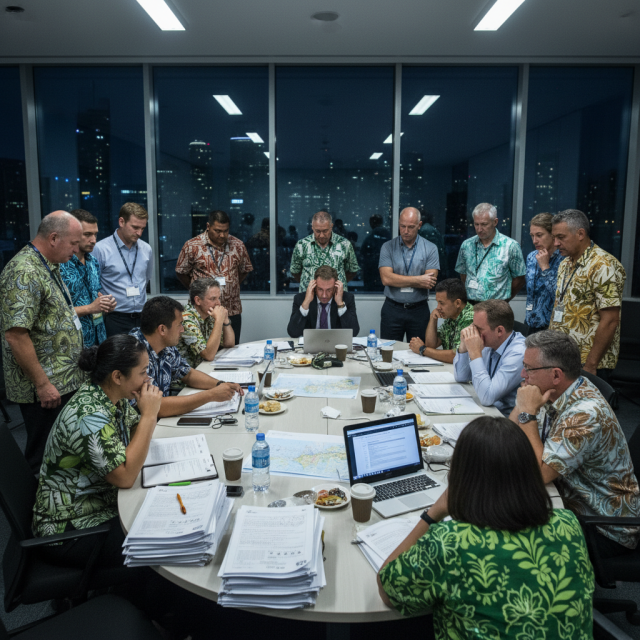
The air inside the Brisbane Convention Centre is thick with exhaustion. It is the final scheduled day of the COP31 climate summit, but nobody is packing their bags. Negotiations have ground to a halt over a single, raw question: Who pays for the damage already done by a warming world?

For two weeks, Australia has tried to position itself as a bridge between the wealthy developed world and its vulnerable Pacific neighbors. As co-host of this ‘Pacific COP,’ the Australian government promised a summit focused on survival. Yet, as the clock ticks past midnight, Pacific leaders say they are tired of warm words. They want cold, hard cash. They are not willing to leave without it.

A Fight Over Survival Money

The central battleground is the Loss and Damage Fund. While the fund was officially launched at earlier summits, it remains largely empty. Pacific negotiators are demanding a minimum pledge of $50 billion a year in dedicated, grant-based funding from historic polluters like the United States, Western Europe, and Japan.

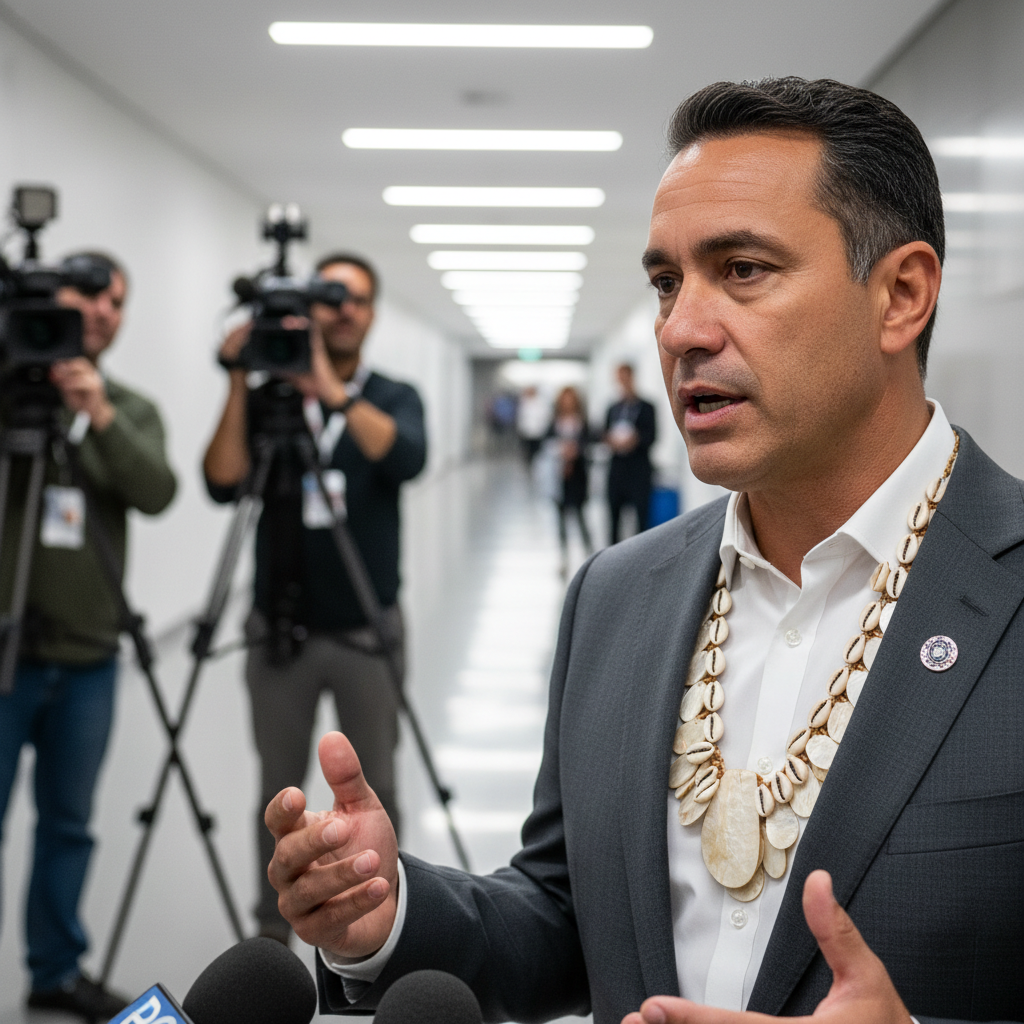
‘We are not asking for charity,’ says Maina Talia, Tuvalu’s climate minister, during a hasty press conference in the crowded venue corridors. ‘We are asking for compensation for a crisis we did not cause. Our islands are washing away. Our groundwater is turning salty. We cannot rebuild our homes with promises.’

Wealthy nations have spent the week trying to dilute these demands. Many prefer to offer loans rather than direct grants, a move that Pacific leaders reject out of hand. They argue that taking on more debt to recover from climate disasters is both unfair and economically impossible. It creates a cycle of poverty that they cannot escape.
Pacific Nations Push Wealthy Allies to the Brink at COP31 Summit — image 1

Australia’s Delicate Tightrope

The summit has placed Australia in an incredibly awkward spot. Prime Minister Anthony Albanese’s administration has spent millions hosting this event to prove Australia is a reliable security and climate partner in the region. It is a strategic move, partly designed to counter rising Chinese influence in the Pacific. But Australia remains one of the world’s biggest exporters of coal and liquefied natural gas.

That contradiction is on full display here. While Australian Climate Minister Chris Bowen has worked late-night shifts trying to broker a compromise, Pacific delegates are pointing out the hypocrisy. They want Australia to commit to a rapid phase-out of fossil fuel exports, not just host fancy diplomatic dinners.

‘You cannot hold our hand in public while funding the coal mines that sink our islands in private,’ says Vanuatu’s chief negotiator, Ralph Regenvanu. ‘Australia wants to be part of the Pacific family. Families do not build their wealth by endangering their siblings.’

The Draft Text Disappointment

A draft agreement released early Friday morning did little to calm nerves. The text contained vague promises to scale up funding but offered no concrete targets, timelines, or binding commitments. It also left open the possibility that private investment and carbon markets could count toward the loss-and-damage totals. This is a major red flag for developing states that want public accountability.

Negotiators from the Alliance of Small Island States immediately rejected the draft. They huddled in closed-door sessions throughout the afternoon, drafting their own counter-proposals. The atmosphere is tense. There is a growing whisper among delegates that Pacific nations might walk out of the talks entirely if their core demands are ignored.
Pacific Nations Push Wealthy Allies to the Brink at COP31 Summit — image 2

Such a walkout would be a diplomatic disaster for Australia. It would strip the summit of its legitimacy and humiliate the host nation on the global stage. That reality gives the Pacific bloc significant leverage, and they are using it to the fullest extent.

No Easy Way Out

Behind closed doors, American and European negotiators argue that domestic political realities make massive cash pledges impossible right now. With inflation squeezing Western budgets and conservative political movements gaining ground globally, committing billions to international climate funds is a tough sell at home.

They have proposed alternative financing structures, such as climate-resilient debt clauses and global levies on shipping or aviation. While Pacific nations support these levies, they argue they will take years to set up. They need funding today, not in a decade.

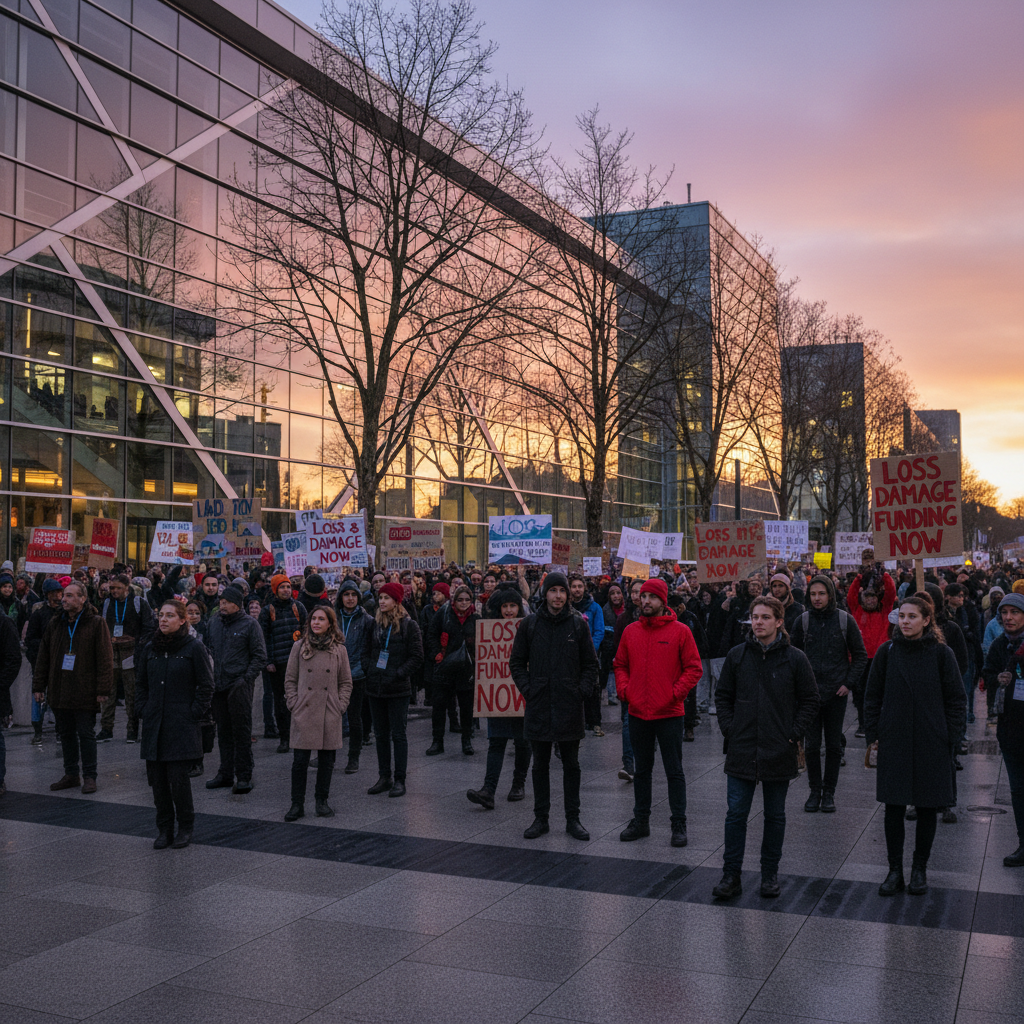
Outside the plenary halls, indigenous activists from across the Pacific and Australia have kept up a constant drumbeat of protests. They have filled the convention center’s plaza, holding signs reading ‘Pay Up for Loss and Damage’ and singing traditional songs of resilience. Their voices echo through the glass walls, a constant reminder of the human lives at stake.

What Happens Next?

As the summit slips into overtime, negotiators are preparing for a long, grueling weekend. The gap between what science demands and what wealthy nations are willing to pay remains vast. But for the small island nations leading this fight, giving up is not an option.

They know that once the spotlight of COP31 fades, the global community’s attention will shift elsewhere. This is their moment of maximum leverage. Whether they can force the world’s richest economies to sign on the dotted line remains to be seen, but they are determined to push the talks to the absolute limit. Every hour they delay is another hour their coastline recedes.

PayPal $500 Gift Card ULTIMATE

Local Publishers Band Together to Fight AI Zero-Click Search Summaries

0
Local Publishers Band Together to Fight AI Zero-Click Search Summaries

Local journalism is facing a brand-new threat. This time, it isn’t Craigslist, and it isn’t Facebook. It is artificial intelligence.

A newly formed coalition called the Local News Copyright Alliance (LNCA)—representing more than 150 regional publishers across the United States—is preparing to file a sweeping federal copyright lawsuit. The target? Major artificial intelligence search engines. The grievance? The rapid rise of “zero-click” search summaries that publishers argue are starving local newsrooms of their remaining lifelines.

For years, local newspapers watched their lucrative classified ads vanish. Then, social media algorithms choked off their referral traffic. Now, AI-generated search tools from massive tech firms threaten to finish the job. By scraping local reporting and summarizing it directly on search pages, these tools give readers all the facts without requiring a single click. Users get the story, but the creators get nothing.

“We do the legwork, they get the eyeballs,” says Michael Miller, a veteran publisher in Ohio who is helping coordinate the coalition. “If our reporter spends three days uncovering a municipal bribery scandal, and an AI engine digests that work into a clean, three-sentence summary, we get zero traffic. No traffic means no digital ad revenue. No ad revenue means we eventually lay off the reporter. It is a straight line to extinction.”

The Death of the Click

The central legal battleground revolves around the concept of “fair use.” Technology giants have long argued that scraping web data to train AI models and generate summaries is protected under U.S. copyright law because it is transformative. They compare their bots to traditional search engine indexers, which show short snippets of text to guide users to original websites.

Local Publishers Band Together to Fight AI Zero-Click Search Summaries — image 1

The LNCA disputes this comparison. Traditional search engines acted as a digital map, directing readers to the source. AI search engines act as the destination itself.

“Traditional search was a symbiotic relationship,” says media copyright attorney Elena Rostova, who is advising the coalition. “Google sent you traffic in exchange for indexing your site. AI search engines break that contract. They do not direct; they replace. This isn’t fair use. It is market substitution, plain and simple.”

The numbers back up these fears. Recent industry studies suggest that AI-driven search interfaces could slash organic search traffic to publisher websites by up to 40 percent over the next two years. For small regional outlets operating on razor-thin margins, a drop of that magnitude would be catastrophic. Many local papers rely on search traffic for more than half of their digital audience.

A High-Stakes Legal Strategy

Unlike massive national publications, regional publishers cannot easily negotiate individual licensing deals with tech giants. While major media conglomerates have secured multi-million dollar partnerships, smaller local papers are routinely ignored or offered minor sums.

The coalition hopes to level the playing field. By pooling their resources, these publishers aim to secure a legal precedent that protects local intellectual property nationwide. The upcoming lawsuit, expected to be filed in the U.S. District Court for the Southern District of New York, will reportedly focus on specific instances where AI summaries copied unique, locally sourced reporting without attribution or license.

Local Publishers Band Together to Fight AI Zero-Click Search Summaries — image 2

This includes coverage of local school board meetings, high school sports, zoning disputes, and local crime—the exact type of hyper-local content that national outlets do not cover.

Tech executives, however, maintain that their tools help users discover information. Representatives from the AI sector have previously argued that blocking search engines from indexing news would harm smaller publishers by making them invisible on the modern web. They argue that AI search engines summarize content to help users decide what to read next, not to keep them from reading at all.

The Future of Local News

Critics of the tech industry say that argument is out of touch with reality. If a local paper closes, there is no original content left for the AI to summarize. The digital ecosystem risks becoming an echo chamber of recycled, unverified information.

“AI cannot go to a town hall meeting,” Miller says. “It cannot look a corrupt official in the eye. It cannot walk the streets of a town after a devastating storm. If you kill the people who do that work, the AI will have nothing left to scrape but itself.”

The coalition is currently gathering evidence, building a database of scraped content and corresponding zero-click search results to prove direct financial harm. Legal experts expect the filing to land within the next month, setting the stage for a prolonged courtroom battle that could redefine the boundaries of copyright law in the digital age.

Ultimately, the lawsuit is about more than just copyright law. It is a fight for survival. Local newsrooms have lost over 70 percent of their advertising revenue since the early 2000s. The rise of AI-driven search could be the final blow, or it could be the catalyst that finally forces tech companies to pay for the content that feeds their machines.

  • Local publishers accuse AI engines of creating a “zero-click” environment that starves newsrooms of traffic.
  • The newly formed LNCA represents over 150 regional outlets preparing for federal court.
  • Tech companies argue their summaries constitute fair use and help users discover information.
  • The lawsuit will focus on hyper-local content that cannot be replicated by national media.

PayPal $500 Gift Card ULTIMATE

MOST COMMENTED

- Advertisement -
Skip to toolbar